 ALVO1.9
ALVO1.9
ALVO1.9
ALVO1.9 / Features
Talking at the same time. Never lagging. Never buried. Always protected. Every ALVO1.9 feature exists for one reason: so that judgement on site never stalls.
01 — Full Duplex
Up to 10 people, all talking at once.
A conventional radio means push, speak, wait for the reply, then let the next person go — over and over. ALVO1.9 is full duplex, so up to 10 people can hold one conversation at the same time.
“One centimetre to go.”
“Stop — the angle is too tight, take it again.”
“I’ve lost sight of it — call it from your side.”
The small calls and the running commentary all happen at conversation speed.
MASTER ×1 + REMOTE ×9 = up to 10 people
02 — Low Latency
In sport, a fraction of a second ruins the call. On a construction site or a factory floor, that same moment becomes a defect — or an injury.
ALVO1.9 runs on 1.9GHz DECT (1.893–1.906GHz), a band that stays clear of the Wi-Fi and 2.4GHz devices crowding most sites. Instead of hear it, then decide, the site moves to deciding while you listen.
03 — ENC 2.0
Noise cancelling refined toward a world-class benchmark
Factories, construction sites, motor noise, a roaring crowd. On site, voices get buried, calls get missed, and instructions get passed on wrong.
ENC 2.0, developed by B-EAR toward a world-class benchmark, lifts the voice that matters out of that noise and delivers it in a form you can actually use.
Not merely audible — accurately heard, and safe to act on. That difference is what decides site safety and the quality of the work.
04 — Security
ALVO1.9 encrypts communication with AES-256, meeting the level of protection professional operations expect.
05 — 1.9GHz DECT
The 1.9GHz DECT band is designed to keep working where crowds gather — event venues, stadiums, exhibition halls.
Dense Wi-Fi and Bluetooth gear, drones overhead — none of it buries the voices on your site. Not under people, and not under traffic.
Range is measured in open line of sight with no obstructions. Actual range varies with environment and weather.
Approx. 800m horizontal / approx. 200m vertical
* 800m is the total distance between two Remotes with the Master in between (approx. 400m horizontal on each side).
06 — Size & Weight
Real-time communication packed into a body the size of a business card. At just 95g you stop noticing you are wearing it, and nothing about the way you move changes — even on sites where you are moving all day.
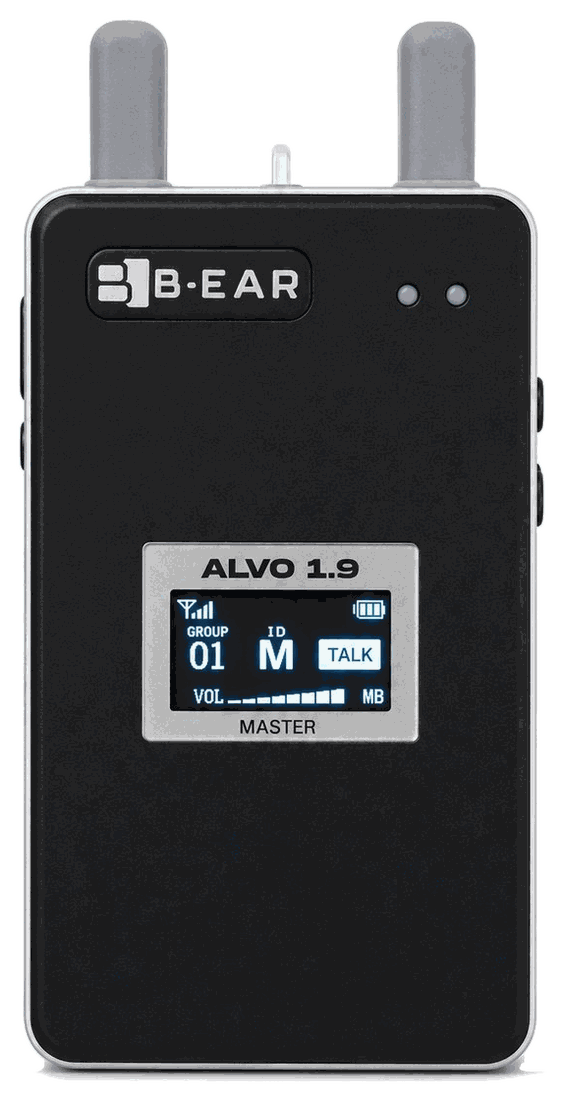 ALVO1.9
H
88.3mm
W
50.5mm
D
12.5mm
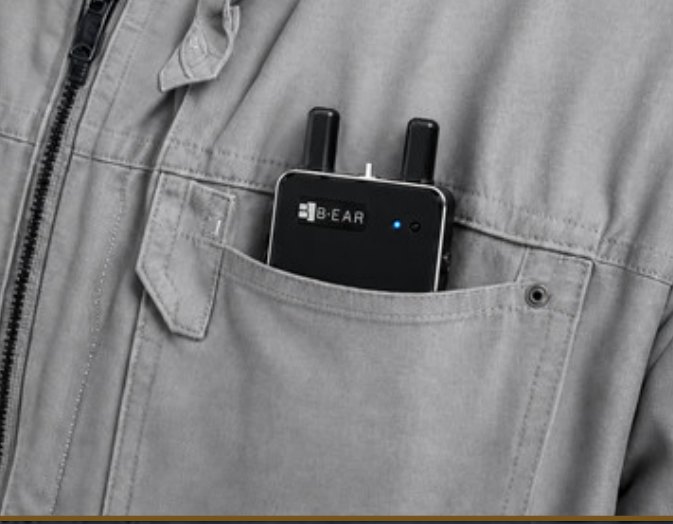
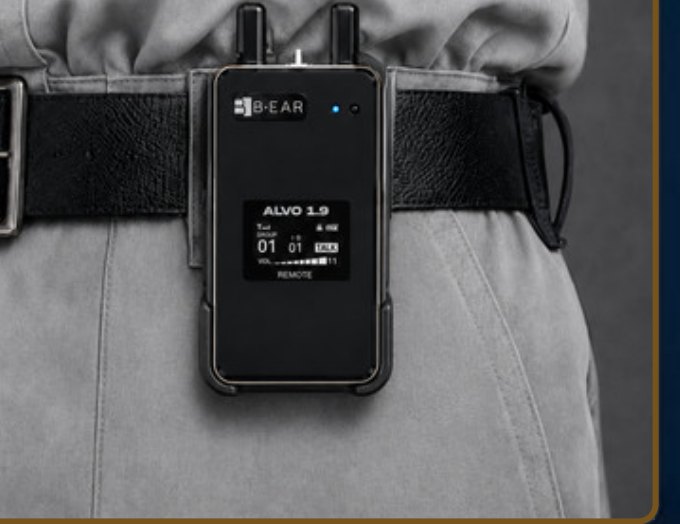
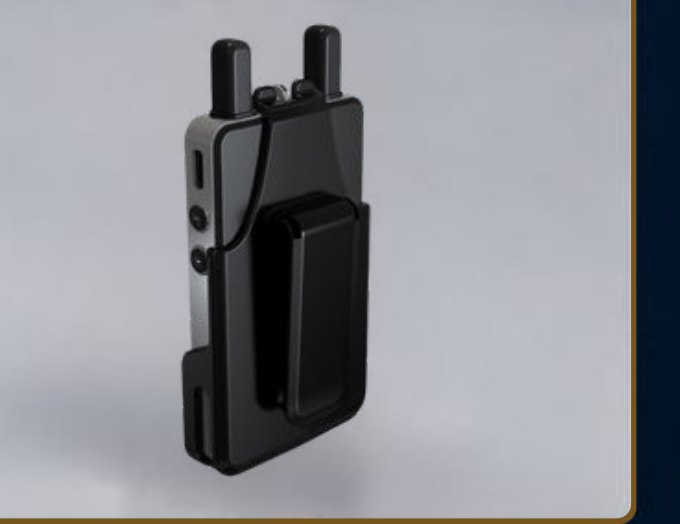
Thin enough not to fight the rest of your kit.
Built light, with long wear in mind.
Compact, unobtrusive, easy to carry anywhere.
07 — Rooms
RM M is the supervisor’s room. You monitor RM A and RM B from it, and every press of the P button steps through RM M → RM A → RM B → RM T → RM M. Brief RM A or RM B individually, or switch to RM T to reach everyone at once. This is the layout we ship by default.
RM T — the all-hands room. Everyone at once.
RM M — the supervisor’s room. Monitors RM A and RM B.
RM A / RM B — separate rooms, one conversation per crew.
P button steps through RM M → RM A → RM B → RM T → RM M
A second layout, available on request
For sites that split into three teams. RM A / RM B / RM C each carry their own conversation, and switching to RM T reaches everyone at once. Every press of the P button steps through RM T → RM A → RM B → RM C → RM T. There is no RM M monitoring room in this layout.
RM T — All-hands room. Everyone at once.
RM A / RM B / RM C — Team rooms. One conversation per team.
P button steps through RM T → RM A → RM B → RM C → RM T
You get one layout or the other, not both.
The two layouts cannot be used together. The default is the one above, with RM M (RM M / RM A / RM B / RM T). If you want RM A / RM B / RM C / RM T instead, tell us when you place your order.
08 — Scale
One group is up to 10 units across roughly 800m horizontally. Beyond that, groups are wired together. More people, or more ground — pick what the site needs.
01 — More people
Wire the masters of two groups together. That is 10 units per group, 20 in total, and the two masters acting as the relay cannot talk, so 18 can talk at once. The area stays at roughly 800m; only the headcount grows.
10 units × 2 groups = 20. Less the 2 acting as relays, 18 talk at once / area stays approx. 800m
This method turns both masters into the relay, so neither can be used for talking. To keep every group’s master free, see method 02 below.
02 — More ground
Link remotes from different groups with a relay base or a relay cable. One relay base takes two remotes side by side — one from each group. Every group keeps its master free for talking, and the chain reaches 3 groups and roughly 2.4km. That is 10 units per group, 30 in total; 4 of them act as relays, so 26 can talk at once. Each group reaches roughly 400m either side of its master: 400m out to the relay, then another 400m from that relay in to the next group’s master. Six of those spans is what adds up to roughly 2.4km end to end.
10 units × 3 groups = 30. Less the 4 acting as relays, 26 talk at once — approx. 2,400m
Check these three points before you settle on a three-group chain.
Install masters and relay bases somewhere fixed. Because this method links remotes rather than masters, every group’s master stays available for talking. But a group’s range is centred on its master, so carrying one around moves the whole range with it and the distance to the remotes stops being predictable. Plan around a fixed position — a crane operator’s cab, a site office.
Each group you add costs latency and audio quality. The audio is handed on at every relay, so three groups fare worse than two. We do not recommend it on sites where even slight delay is unacceptable, or where noise cancelling has to stay effective in constant noise.
2.4km is a clear line-of-sight figure. The distance is physically reachable, but it assumes nothing at all obstructs the signal. In a built-up town centre or a residential area, planning for that figure is not realistic. How far it actually carries depends heavily on the site.
A cable between groups puts both sides in the same conversation.
Combining groups raises how many can talk at once.
Communication carries across areas, so wide sites stay connected.
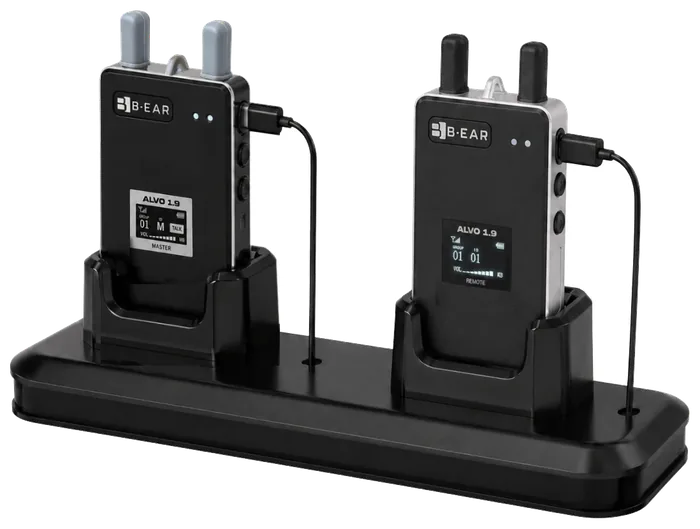
B-ALEXa
ALVO relay base
Takes two remotes side by side, one from each group, and joins the two groups.
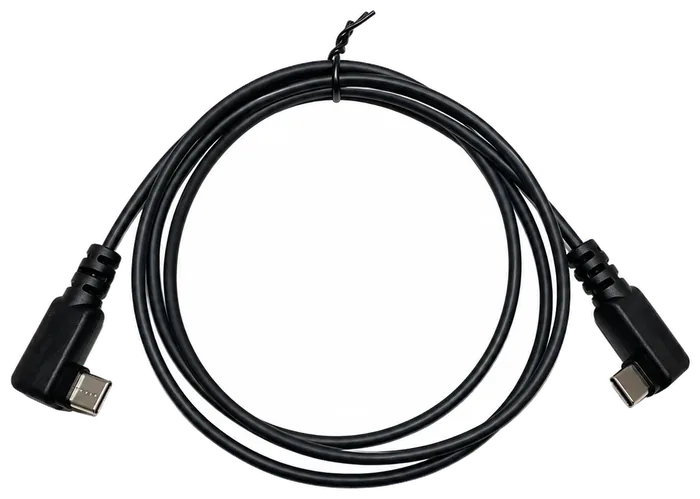
B-ALEX10
ALVO relay cable, 1m
Wires two docked Masters together — for when the units sit side by side.
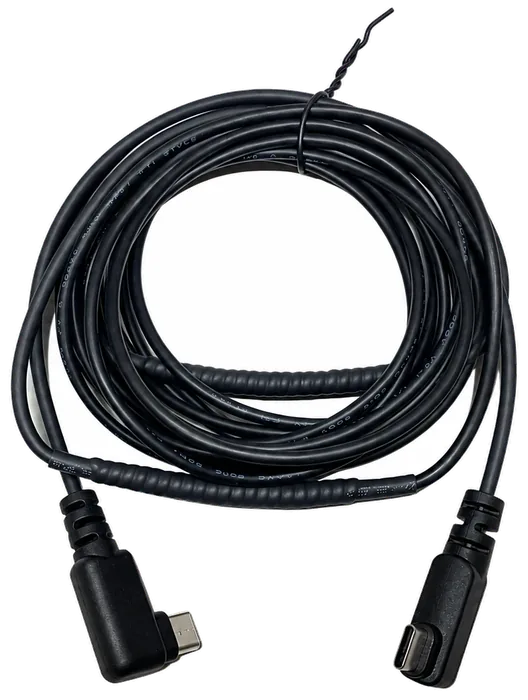
B-ALEX30
ALVO relay cable, 3m
The same wired link with more reach. Wired linking carries up to 18 units.
A unit acting as a relay cannot be used for talking, which reduces the number of
simultaneous talkers by that amount. In a 3-group chain of 30 units, 4 are spent on the
relays, so 26 can talk at once (9 in each end group, 8 in the middle one).
3 groups, 26 units and approx. 2.4km assumes clear line of sight with nothing
obstructing the signal. How far it actually carries depends on the site, and every
group you add costs latency and audio quality.
09 — Roaming
Once groups are linked and the covered area grows, patrolling staff move between several zones. Register up to four groups in advance, and a short press of the mode button Ⓜ steps manually through them in order.
Register up to 4 groups / one short press of Ⓜ to switch (switching is manual)
Production lines, maintenance, central monitoring, outdoor plant — vast sites split into many zones. Put a Master in each zone, link them, and the whole facility is covered.
Floors, wings, nurse stations, rehabilitation rooms, offices — areas divided by walls and partitions. A Master per floor keeps staff connected as they move through the building.
Pitchside, stands, gates, security, operations, medical — venues split into wide separate zones. A Master in each one covers the whole ground.
10 — Connect & Charge
01 — Bluetooth 5.2, or wired via the adapter cable
Pairs with Bluetooth headsets, and works with wired headsets through the dedicated adapter cable — so you can choose by site conditions rather than by the connector.
An off-the-shelf USB Type-C headset cannot be plugged straight into the ALVO unit; the dedicated adapter cable is required. Even with the adapter, some headsets may not operate correctly depending on their specification.
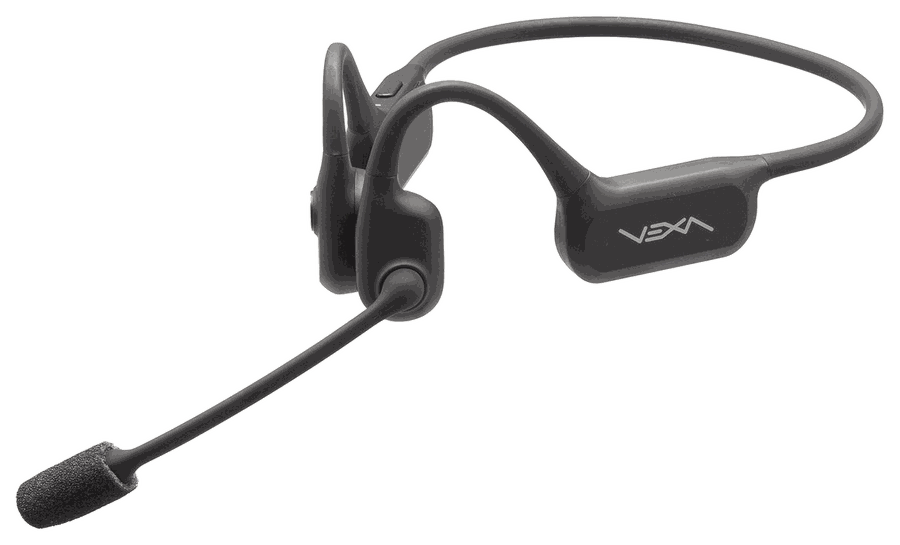
VEXA
SSW-1121
Product page ↗
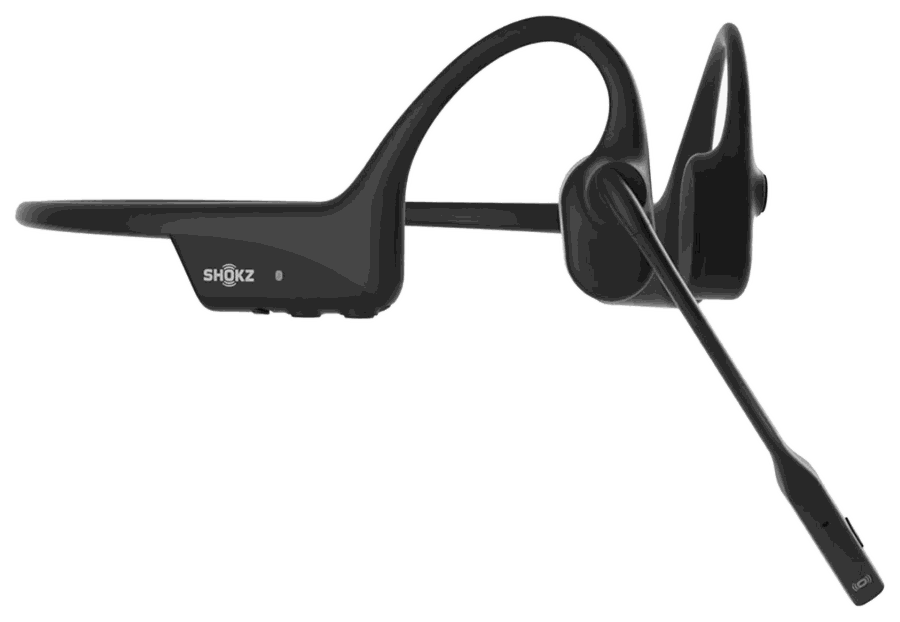
Shokz OpenComm2
2025 Upgrade
SKZ-EPB2
Product page ↗
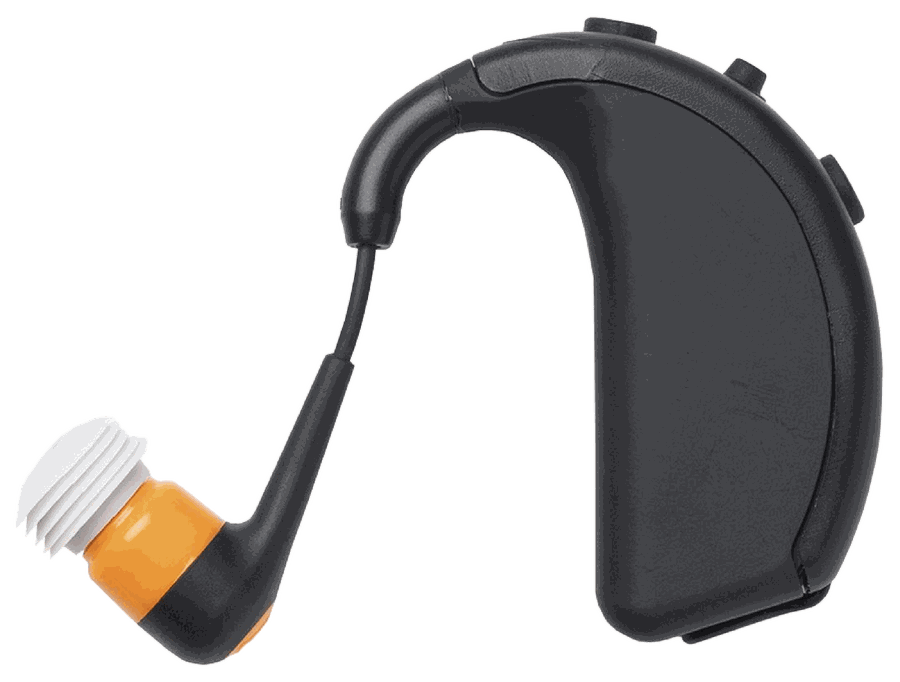
AURO
Bluetooth type
AUROEA-500
Product page ↗
Examples of headsets that pair over Bluetooth. All three ship with a USB-C charging cable. The maker pages are in Japanese.
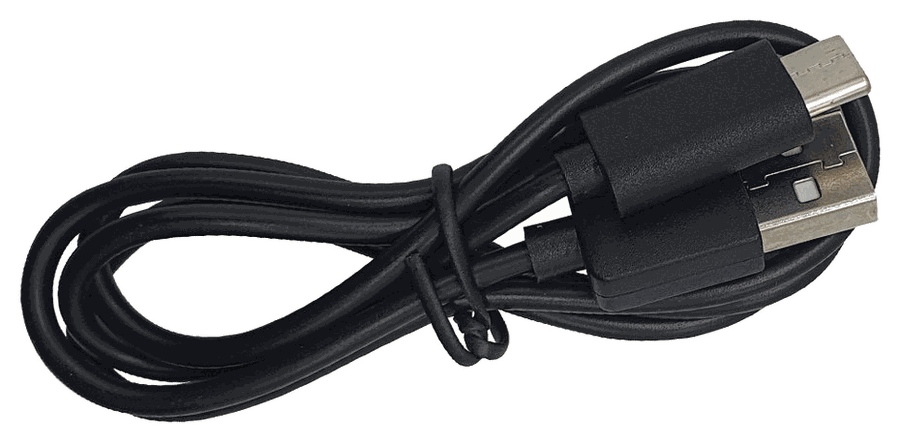
USB Type-C
charging cable
B-F06
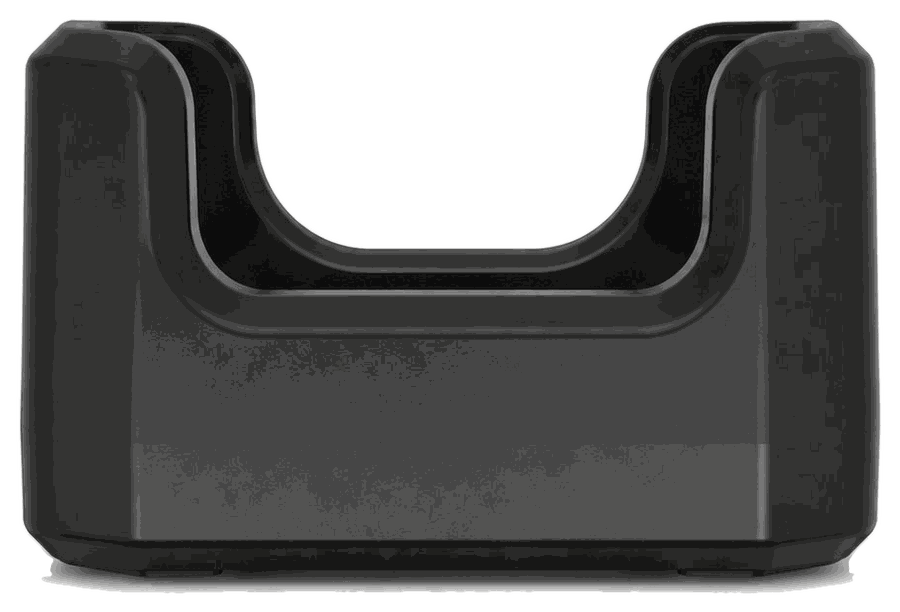
Single-unit charger
B-ALC01
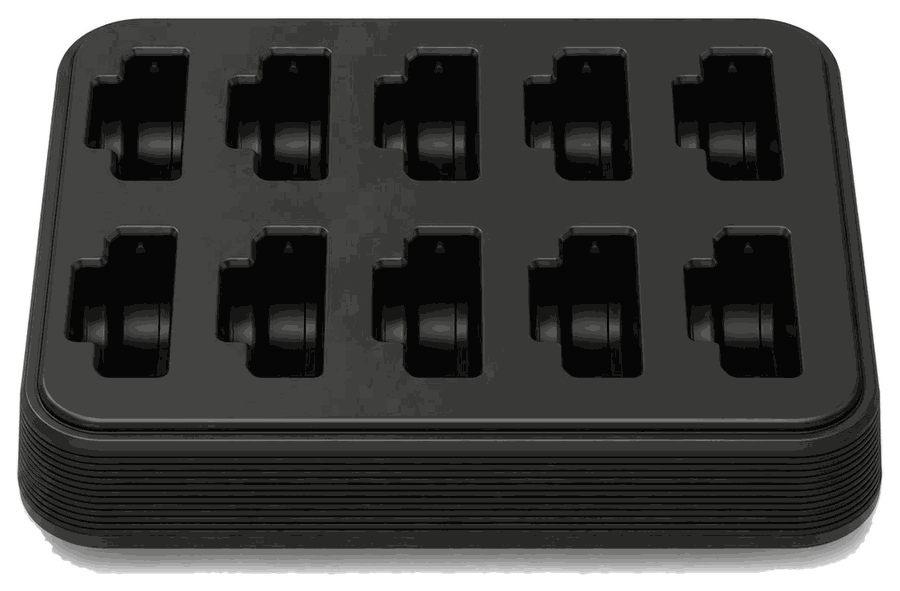
10-unit charger
B-ALC10a
02 — Three ways to charge
1. USB Type-C cable
2. Single-unit charging dock
3. 10-unit charging dock
11 — Durability
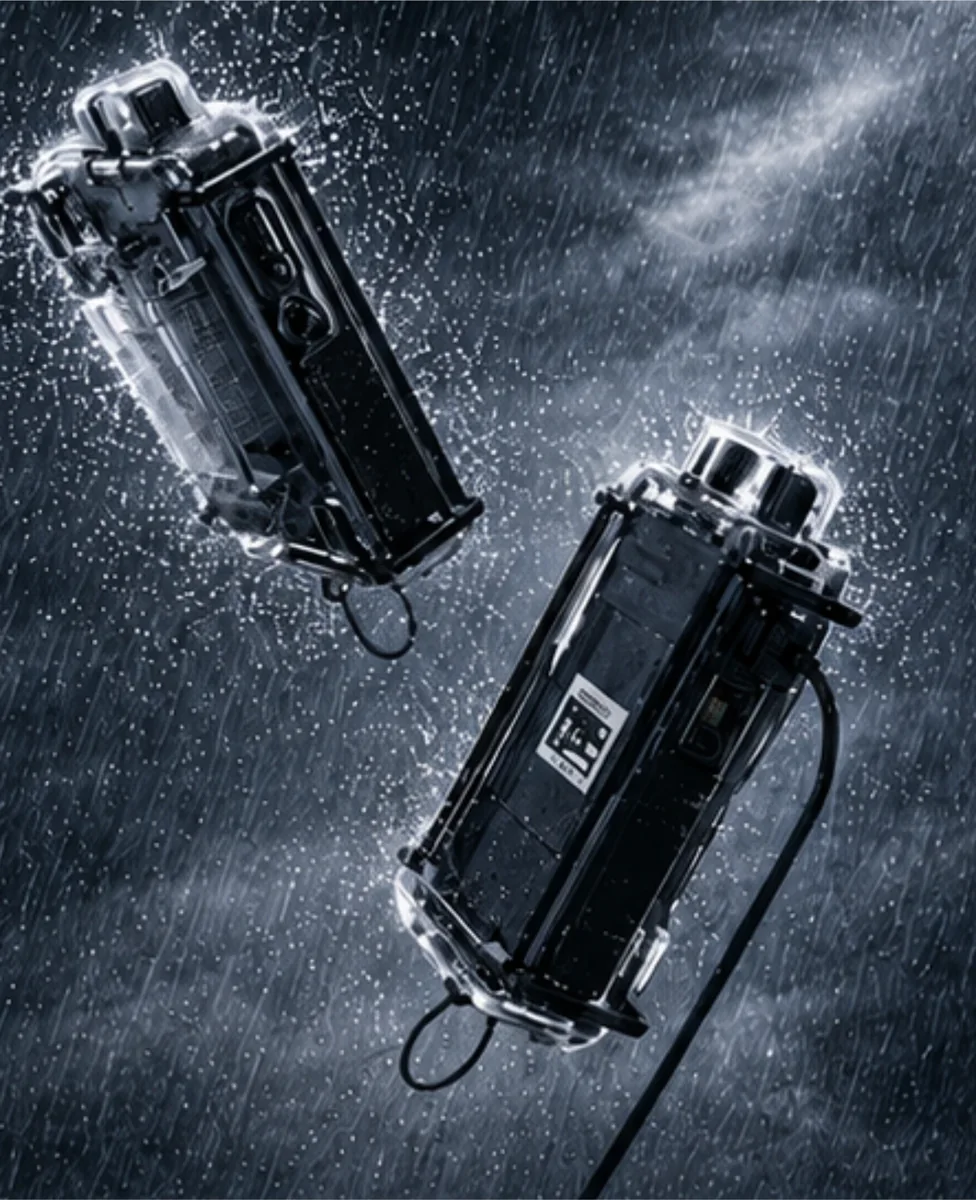
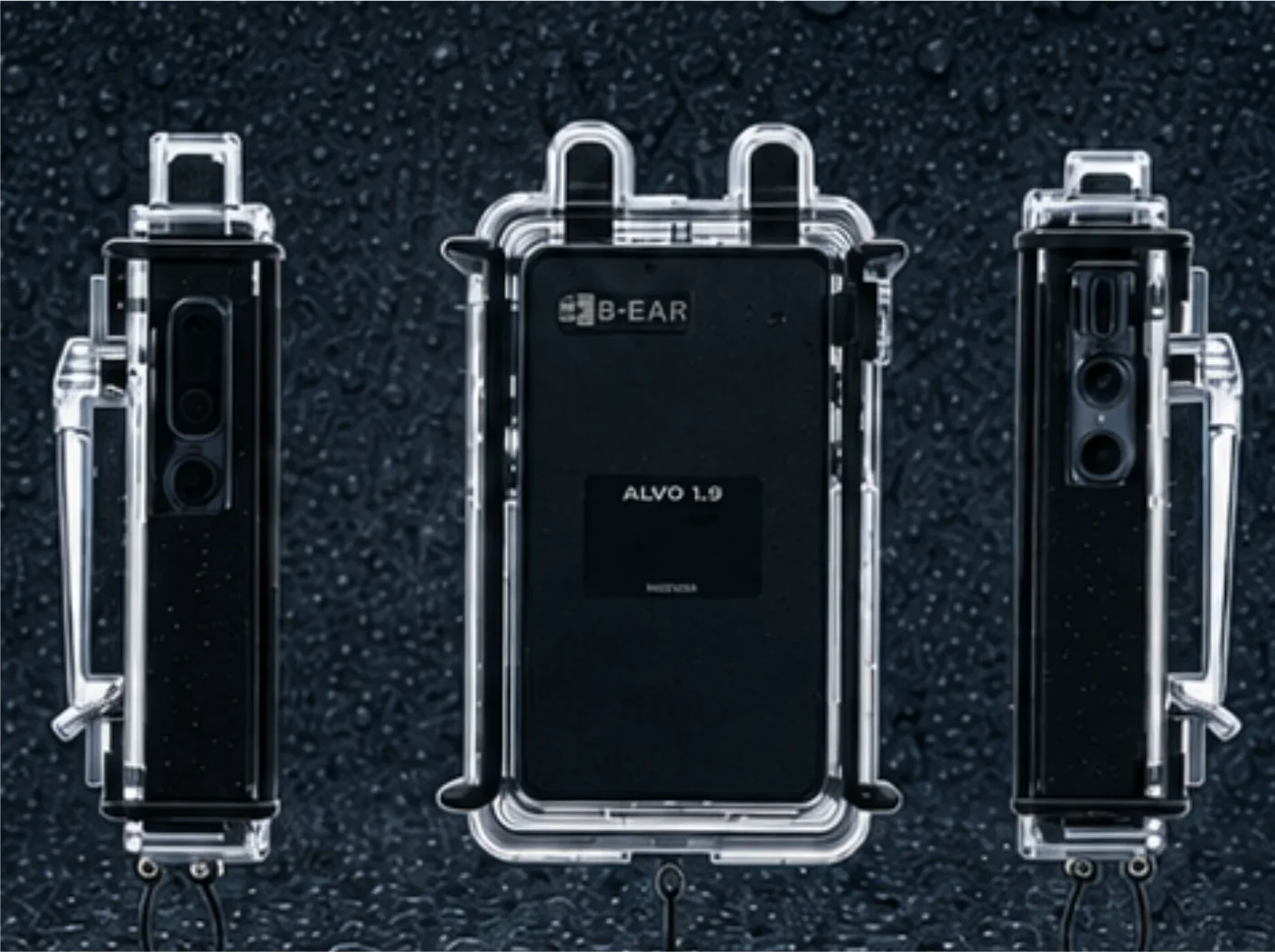
IP67 waterproof case B-ALC2 (optional)
A dedicated case that seals the unit against water and dust and takes the edge off impacts. Rain, heavy dust, work around water — communication keeps running.
UNIT
IP54
WITH CASE
IP67
H
120mm
W
81mm
D
32mm
WEIGHT
99.6g
IP67 applies with the waterproof case fitted. The ALVO unit itself is rated IP54.
The size and weight above are those of the B-ALC2 case. The ALVO unit itself is
88.3 × 50.5 × 12.5 mm and 95g.
Unit counts, headset selection, how much area you need to cover, running alongside
existing radios.
Nothing needs to be decided yet — start with the conditions on your site.